
Gardening Blackheath: Recycling and Sustainability
Welcome to our practical overview of how Gardening Blackheath supports an eco-friendly waste disposal area and the creation of a sustainable rubbish gardening area across Blackheath. Our approach blends community action, borough-level waste separation practices, and low-carbon logistics to reduce landfill, increase reuse, and improve soil health. This page explains targets, partnerships, local transfer stations, and the small operational changes that make a big difference for Blackheath gardening and green spaces.Blackheath gardening initiatives sit at the intersection of civic policy and neighbourhood action. In collaboration with local authorities (including approaches used by neighbouring boroughs such as Lewisham and Greenwich), we promote clear waste separation: dry recyclables, food and garden organics, glass, and textiles. These boroughs typically operate separate collections or bring sites for green waste and compostables, and we encourage gardeners to follow those systems to keep our community compost and bulk disposal streams clean and efficient.
 Sustainability for Gardening in Blackheath means measuring progress. We have set a recycling percentage target of 65% household and community waste diverted from landfill within three years for collaborative gardening sites and events. That figure aligns with ambitious local targets and is achievable through consistent separation of garden waste, composting food scraps on site where appropriate, and diverting building waste from landscaping projects to reuse centres and transfer stations.
To support an effective eco-friendly waste disposal area we map nearby transfer stations and reuse centres. Key local facilities include borough transfer stations that accept green waste, bulky items and segregated construction materials, plus household recycling centres where residents can drop off hard plastics, timber offcuts, and soil. By coordinating drop-offs and communal collections we reduce multiple car trips and lower the carbon footprint of disposal in the Blackheath area.
 Our sustainable rubbish gardening area approach uses several practical measures: designated green bins for seasonal prunings, on-site compost bays for leaf litter and non-meat kitchen waste, and clearly labelled zones for salvaged materials. We also provide training sessions on correct sorting, and distribute simple signage to help volunteers and neighbours follow the boroughs' rules for glass, paper, food waste and recyclable plastics—so that recycling systems work as intended, with minimal contamination.
Partnerships are central to success. We work with local charities and reuse organisations to extend the life of tools, timber and pots: donations of serviceable tools go to community groups; recovered tiles, bricks and paving slabs are offered to social enterprises that specialise in reuse. These links turn potential waste into valuable resources for other projects, reducing demand for new materials in Blackheath gardening and supporting a circular economy locally.
Our logistics include a fleet of low-carbon vans for scheduled collections and material transfers. These vehicles are either electric or low-emission hybrids, chosen to minimise disturbance and lower greenhouse gas emissions for routine waste runs between gardens, transfer stations and partner charities. Using small, efficient vans also allows us to consolidate loads and avoid multiple private trips to the recycling centre, which benefits both air quality and local traffic around Blackheath.
 We maintain an active exchange network with charities and community groups. Items that cannot be composted—such as usable planters, stakes, and gentle-usage hand tools—are cleaned and passed on. Larger landscaping project leftovers like reclaimed bricks and sleepers are triaged and listed for collection by reuse charities or social enterprises, ensuring materials remain in productive circulation rather than entering the waste stream.
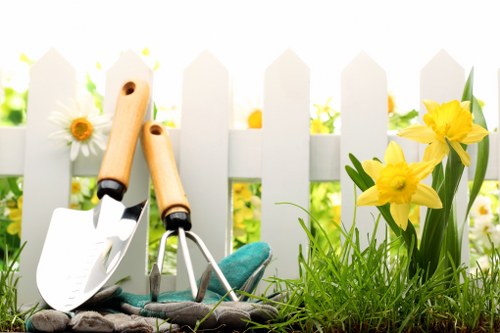
Practical actions for a greener Blackheath
- Sort at source: Keep garden cuttings, food scraps and recyclables separated to reduce contamination.
- Use community composting: Join or help maintain shared compost bays to transform green waste into soil conditioner.
- Donate and reuse: Offer usable materials to local charities instead of sending them to transfer stations.
- Plan collections: Coordinate with low-emission van pick-ups to reduce individual journeys to civic amenity sites.
- Follow borough guidance: Adhere to Lewisham and Greenwich-style separation schemes for maximum recycling efficiency.
Monitoring and next steps
We track progress against our 65% recycling target by logging tonnages diverted to composting, reuse and civic recycling centres, and by recording the volumes taken to local transfer stations. Regular audits help us identify contamination problems and adjust signage, collection frequency or volunteer training. Transparency and data allow us to refine the eco-friendly waste disposal area model and scale best practice across more Blackheath gardening sites.In the medium term we aim to increase the community diversion rate further, expand partnerships with charities that specialise in tool and materials reuse, and gradually grow the low-carbon fleet. These steps ensure that the sustainable rubbish gardening area not only reduces landfill but also supports local jobs, lowers transport emissions and strengthens neighbourhood resilience.
Conclusion: Gardening Blackheath champions a pragmatic, community-led route to sustainability: pairing a clear recycling percentage target with mapped transfer stations, active charity partnerships and low-carbon vans. By following borough waste separation practices and focusing on reuse and composting, Blackheath gardening can become a model of how urban greenspaces manage waste resourcefully and responsibly.